Home » Articles posted by cbrowninkk (Page 10)
Author Archives: cbrowninkk
Mindful morning start #1
When you first awaken in the morning, start with gentle mindful movements like a cat or dog stretches when they get up. Learn to listen to your body. Begin to recognize its changes. Try the suggestions that will appear over the course of the coming days, to renew or build your connection with your body’s alignment starting with a morning regimen, one exercise at a time, as you attentively experience each one and then finally put them all together in a series of gentle exercises you can use every morning to get your day going.
#1. Begin with body rolling. It’s a soothing way to get the blood flowing as you roll from side to side with your arms and bent knees folding and unfolding as you roll back and forth. Begin lying on your right side in the fetal position. As you begin to roll on your back, let your left arm float open as it crosses your body and your back flattens on to the bed. Your left knee mirrors the movement of your arm as the hips. Complete the motion by bringing your right arm and leg over to meet their left side’s counterparts in the fetal position. Do this rolling back and forth 4-6 times. Sometimes this is all I do for 2-5 minutes. It feels great on my back.
Younger Dance Students
…I have found it great to use with my younger students who 1 – lack coordination 2 – don’t understand the idea of engaging all muscles and 3- need to work on balance, control and core engagement. I would be happy to share my process with anyone interested. This tool is really making a difference in the kids training- would really love to utilize it with classrooms of kids instead of one on one.

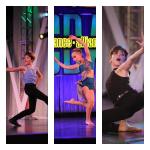
Jen ~ Artistic Fusion Dance Academy
Start to Improve Lower Body Strength, Stability and Joint Mobility when you first rise
Start to Improve Lower Body Strength, Stability and Joint Mobility when you first rise, stand and walk in the morning. Think of how a cat or dog stretches when they get up. Learn to listen to your body and begin to recognize its changes. We are not taught to do this. Most of us just get up and hit the ground running without a thought of the body’s readiness to move or even the newness of the day. Try these suggestions to reconnect or begin to care for your body’s alignment starting with a morning regiment.
First begin with body rolling. It’s a soothing way to get the blood flowing as you roll from side to side with your arms and bent knees folding and unfolding as you roll back and forth. Begin lying on your right side in the fetal position. As you begin to roll on your back, let your left arm float open as it crosses your body and your back flattens on to the bed. Your left knee mirrors the movement of your arm as the hips. Complete the motion by bringing your right arm and leg over to meet their left side’s counterparts in the fetal position. Do this rolling back and forth 4-6 times.
When you finish rolling, gently draw your knees to your chest, either together or slightly apart, whatever is comfortable as best you can and hold for a count of 30. Then gently rock back and forth on back. Don’t roll over to your side like you in the first warm up. Do this 4-6 times.
Once your rocking is complete, become still and begin to visualize your head and neck in line with your spine, imagining someone is running a string from the center of your head to the tip of your tailbone as the spine aligns itself. Place your arms a few inches from your side with your palms down and legs straight, your feet and knees in line with your hips. Wiggle your body around a bit, settle in and relax for a minute or two in a brief mindful meditation.
Next, press the heel of one leg into the bed, keeping it straight. Feel your leg become tense and hold for 4 counts with the first press being light and subsequent presses done with quick release of the heel into the bed. Repeat this 4-6 times. Repeat with the other leg holding for a count of 4 and repeating this 4-6 times. As your body gets used to this, you might try increasing to 8-10 times…then 12-16 times. This increases circulation. Don’t push too hard in the beginning, as you may get a leg cramp! Once finished, prepare to stand.
As you come to your feet, remember to take your time and go slowly. Come to your feet (or sitting if you choose), begin to do foot circles by rolling the whole edge of your foot on the floor or the SANDDUNE™, to stretch and strengthen ankle flexion. Be sure your feet are in line with your hips as you stabilize yourself with a barre, chair, or sturdy counter. Be sure the knee of your standing leg is soft and your core is intact and active. Try this beginning with 5-10 circles clockwise and counter-clockwise with both feet working up to 15-20 circles. This movement will create an awareness of how the edge of the foot feels. This is something many people NEVER think about unless they are an athlete, especially a dancer, gymnast or athlete participating in any discipline involving continuous running, making rapid changes in many directions.
Now focus on your knees. I hear more people complain about their knees than their feet. When doing standing foot circles it is natural that knee circles follow. As you circle your foot, notice how the knee hinge is now drawing its own circle. This a natural integration of movement required for walking. Allow your foot to balance on the ball of the foot and concentrate on the circle you are now drawing with your knee. You can see the same movement with the knee if you are sitting, but not as pronounced. Watch it, become aware of the movement and how it feels. Repeating knee circles with the foot off the ground works the Psoas muscle in your back heightening your awareness of its connection with the hip joint socket. You can do this on the floor or the SANDDUNE™.
Because the feet and knees are now engaged, it is natural that the hips begin creating their own circles. Both standing/anchor leg and pushing leg are now engaged and the hip joints have begun to swivel, drawing their own circles. Hip swivels will create greater strength and mobility as the body naturally “oils the hip joints.” Go clockwise and counter-clockwise. This exercise can be done on the SANDDUNE™ as well with sturdy support or with a companion to spot you. Have one hand on your hip the other on bar or support. If your balance is good, hands on both hips. Start with 4-6 swivels in each direction working up to 12-16 times. If standing is not an option, do this on your knees and as strength and flexibility increase, you can work your way to standing.
Finally, keeping your standing/anchor leg’s knee soft, slightly bend your other knee and allow the ball of the foot to push into the ground as the heel remains raised, off the floor. This action lifts the “hip chamber” up and when you drop the hip back down it relaxes the muscles and joint. Do this 4-6 times on each leg working up to 8-10 times. The pushing action into the hip chamber strengthens the lower back muscles as well as the leg. Now you’re ready to get your day rolling and body is too.
In response to Fall Prevention “Call to Action” Post
What an appropriate document to receive at this time, when the CALIFORNIA COLLEGE SYSTEM, UNIVERSITIES and COMMUNITY COLLEGE, are addressing this very issue, NOT IN A POSITIVE WAY, BUT IN A NEGATIVE WAY, with issue SB 173, which is undermining their own fiscal state budget in the overall scheme of things.
THIS “CALL TO ACTION” is one which not only has a “clear sense of vision,” but allows “the senior adult” to live wisely and confidently regarding ones own wellness choices. Retirement is not about “stopping” in order to get on with die -ing. It is a way of refocusing ones energy and rediscovering why you are on this planet, and what you next mission is – how you can expand others with your gifts, passions and talents. Most retirees do this amazing work as volunteers. They raise funds, volunteer at VA’s, run the “Meals on Wheels” programs which feeds millions of seniors. They run the voting booths, volunteer at hospitals, and these areas named are but a speck of countless hours spent addressing and helping others. They also pay taxes.
The “Call to Action” would save the STATE MEDICARE SYSTEM thousands, no millions of dollars in medical, rehabilitation, and therapeutic costs. It is as if “the blind are leading the blind.” Senate Bill 173, puts education at risk, without considering how many of our SAFETY, WELLNESS, and ADULT EDUCATION PROGRAMS ARE actually addressing FALL PREVENTION through such classes as “BALANCE and MOBILITY” which uses the guidelines of STATE RESEARCH PROJECTS such as performed by Dr. Rose and Dr. Jones through the Gerontology Department at Ca. State University,Fullerton. entitled “FALL PROOF.” The Fall Prevention Project was documented with results that clearly address not only a Positive Approach to Balance Awareness and how to strengthen the body to keep “self-awareness” as a priority, but also documents the medical costs spent on hip replacements, which may or may not save ones life in the end. People, wake up. Your power and rights are being usurped.
I use the Sanddune in my four Balance Courses, because of the amazing and positive results. And guess what? At this time, Saddleback Emeritus classes are free. Wake up, the enemy is at our gates, and it is coming to steal your “rights to live.” Miriam Tait

Fall Prevention “Call to Action”
With more nursing homes and rehabilitation facilities reporting increases of people being admitted who have fallen, this fact is creating a “call to action” nationwide, to develop Fall Prevention and fitness programs that are effective and enjoyable while creating a community of support for those who need to embark on a renewal of fitness and vitality. People like Jack LaLane, Lilias, Billy Blanks, Jane Fonda, Joseph Pilates, and Rodney Yee have created fitness communities that can be embraced at all fitness levels with proper guidance – from kids to grandparents. Letting physical vigor and productivity drop because you have retired, or have reached that “age” that the “norm” says you can let it all hang out, creates the chances of becoming a candidate at risk for falls. Many people hit age 50 and decide I have had enough of sweatin’ to the oldies and runnin’ on empty. My feet hurt and now I can sit back relax and gather some moss on the stone that has stopped rollin’. But, hey look at the Rolling Stones – no moss is gathering there! Ignoring the signs of loss of balance and strength can lead to falls. The chances escalate that you will continue to fall without some sort of intervention in the form of a fitness program to strengthen balance, gait and flexibility. The increasing difficulties of getting out of the car or your favorite chair are a couple of signs to be aware of.
Since the Baby Boomer population began hitting age 65 in 2011 at a rate of 8,000 per day, it is alarming that one-third of people over 65 are injured due to falls. Make it a personal “call to action” to start a fitness program or keep your fitness on a level that is compatible with your capabilities, age and health. Some will have greater capabilities than others and that’s fine. It’s all about taking care of your health and fitness. Start really enjoying your grand-kids or kids in some cases. Take the time to talk to your doctor about exercise and diet. Join a club or a group around the corner at a recreation center.

I am physically active so why should I use the SANDDUNE™?
The Original SANDDUNE™ provides an additional platform for more effective warm-up and cool-down. Incorporate some of your stretches along with an easy jog to kick start the body’s engine. Try adding regular stationary exercises (ie…curls on the uphill slope) on the SANDDUNE™ for greater challenge because of the additional balance required. Golfers, who practice simulated strokes on the SANDDUNE™, report cutting strokes off their game because their bodies are more responsive. With consistent use, muscles are developed that you have been unaware of and were previously unengaged. This apparatus will help increase lean muscle mass. It is an easy workout perfect for a light day – add hand or ankle weights to increase the intensity of the workout if preferred.
For active people and athletes, cross training on the SANDDUNE™ translates into better coordination, more flexible joints/tendons, and responsive musculature. When beginning training or resuming working out after a self-imposed or injury-imposed layoff, the SANDDUNE™ helps reduces chances of injury and shortens recovery time as the sarcomeres (which are groups of muscle cells involved in the contraction and relaxations of muscles) are not so easily torn. It is the breakdown of the cells and muscle tissue that give us the inflammation and soreness we all love to hate. “No Pain, No Gain” as the old saying goes!
Muscles are usually stiff and sore a day or two after returning to activity because of damage to muscles fibers being stressed past their “normal or current” length from daily use. By the time you are into week #2 of becoming “Rocky”, additional sarcomeres have developed within the muscles, lending themselves to greater strength and protection of the muscles as they are being built up. Starting the workout regimen more prudently takes from the amount of “pain we gain” as we begin rolling toward fitness again. Remember that the SANDDUNE™ encourages proper use of the whole body in walking, running, golfing, dancing and sports.
I feel unsure of my balance…
I feel unsure of my balance and need a walker or a cane for support now. My friends tell me that I shuffle my feet. How can the SANDDUNE™ help me?
Working out on the SANDDUNE™ both strengthens and conditions the muscles and the joints of your lower body because it engages those them more fully in the process of walking. In addition it involves muscles of your abdominal core as it activates the sacroiliac joint where your spine connects to the pelvis.

Exercise option to add to your regimen
Why should I try using the SANDDUNE™ instead of the treadmill or elliptical trainer all the time?
SANDDUNE™ is a molded foam exercise device comprised of a blend of two different foam densities. One density allows you to sink into the SANDDUNE™ and the other pushes your foot back up. If walking or exercising on conventional surfaces causes you pain or discomfort in your joints, either during the activity or afterwards, you will be amazed at how comfortable walking on the SANDDUNE™ feels. Especially after wearing high heels or heavy work boots it is an immediate relief and comfort to step on the SANDDUNE™. The uniqueness of its form, angles and materials combined, offer the body greater opportunity to incorporate a higher degree of participation of the small, forgotten muscles involved in proprioceptive system and allows better mobility in the hip joints, knees, ankles and feet.

Another option for exercise
Why are active people in their 50’s and 60’s needing knee and hip joint replacements? Could it have something to do with how we have exercised in the past and into the present?
When you think about it, we live in a very flat world. We walk on hard surfaces. Pavement, flooring, stairs, treadmills and even elliptical trainers do not require the foot to respond in the way that walking on the uneven ground or sand does. In fact all that hard pounding on pavement actually dulls our sensory systems. We have over 90 muscles in our pelvic area, legs and feet. Walking and running on hard, unforgiving surfaces cause the smaller, more sensitive muscles to guard against injury. They protect themselves by no longer participating when we walk. The result is that we use the same large muscles in our legs and buttocks in walking, running, biking and sports over and over. Eventually those overused muscles get stiff and sore, limiting movement in the joints. The result is that we are wearing out the joints of our legs early in our aging process. The SANDDUNE™ offers the option to “train” on a surface that is “easy” on the joints, muscles and tendons.
 Original SANDDUNE™