Home » Posts tagged 'balance' (Page 2)
Tag Archives: balance
The Networking Maze Tendons and Ligament

Get Low to Stay Low Workout
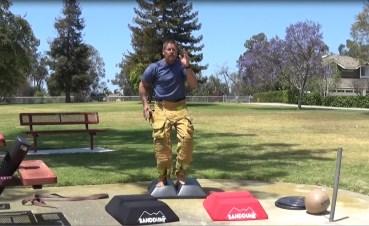
Demo and Brief Description of Low Assault Workout
As professionals whose livelihood weighs heavily on their ability to get into and out of buildings that are burning and collapsing, firefighters know that their job demands superior upper body strength and balance coupled with that same demand for their lower extremity strength and mobility. Their job requires them to work in a crouch position staying low to the ground so their profile is not in the midst of blinding, choking smoke. With job descriptions that include:
- Guiding and carrying people out of burning cars or collapsing buildings
- Tearing down walls to create escape routes
- Dragging 50 lb hoses
This equates to lower body strength being paramount. Fast reaction time, speed and strength are key. In the athletic world:
- defensive and offensive linemen in football
- sprinters coming out of the blocks
- jockeys
- ballet dancers
- martial artists
- skiers
- soccer players
are some examples of the athletes whose lower body strength, reaction time and speed are critical to their
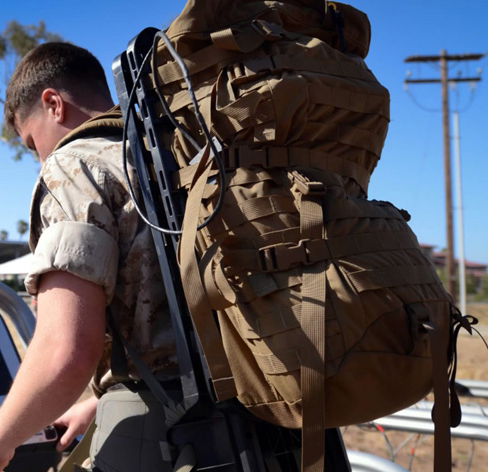 performance. This same premise can be applied to military troops who must carry 75 lbs and upwards on their backs during training and on the battle field. The Low Assault – Get Low to Stay Low workout will help build sustained, explosive muscle strength and fluid lower body power.
Retweet From @ Super Fit Senior
Can regular exercise really cut the risk of degenerative diseases like Alzheimer’s?
http://nyti.ms/1z6AtGZ
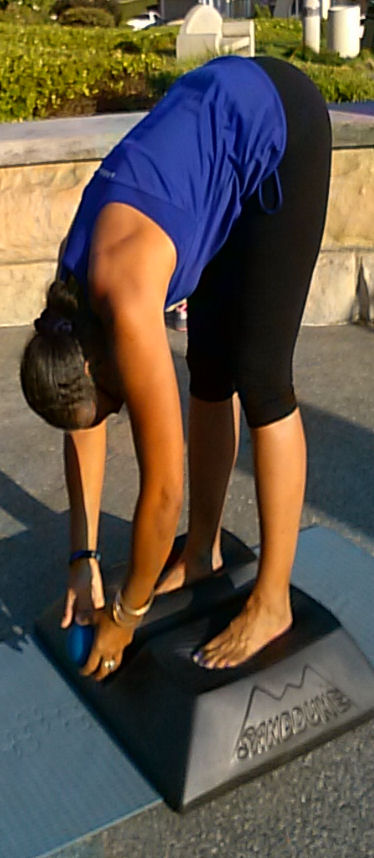
Roll Down Stretch with Small Hand Held Exercise Ball

Lunge SANDDUNE style

Elbow Plank

Standing Big Toe Hold

Seated Big Toe Hold

Pilates Single Leg Stretch on Original SANDDUNE
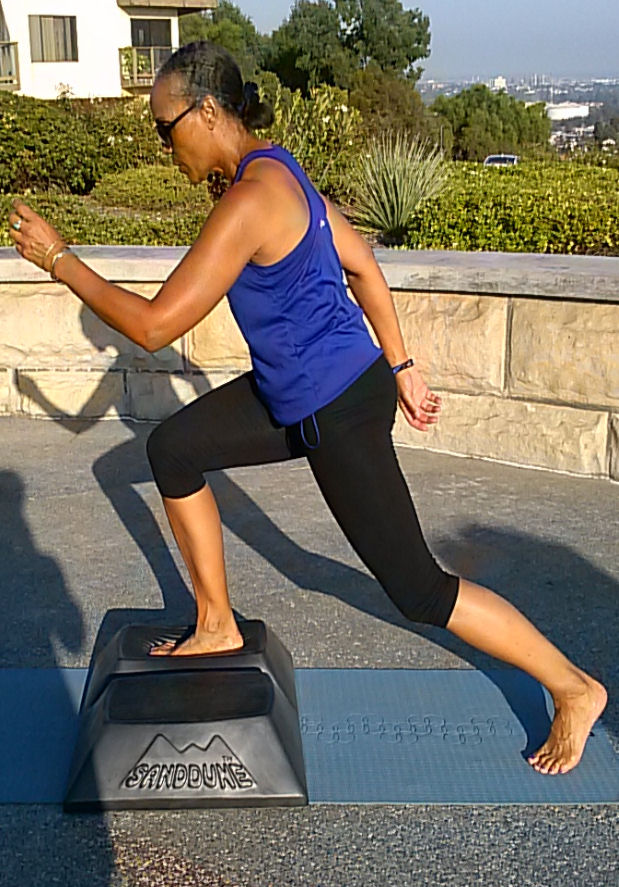
Step Up Rear Lunge
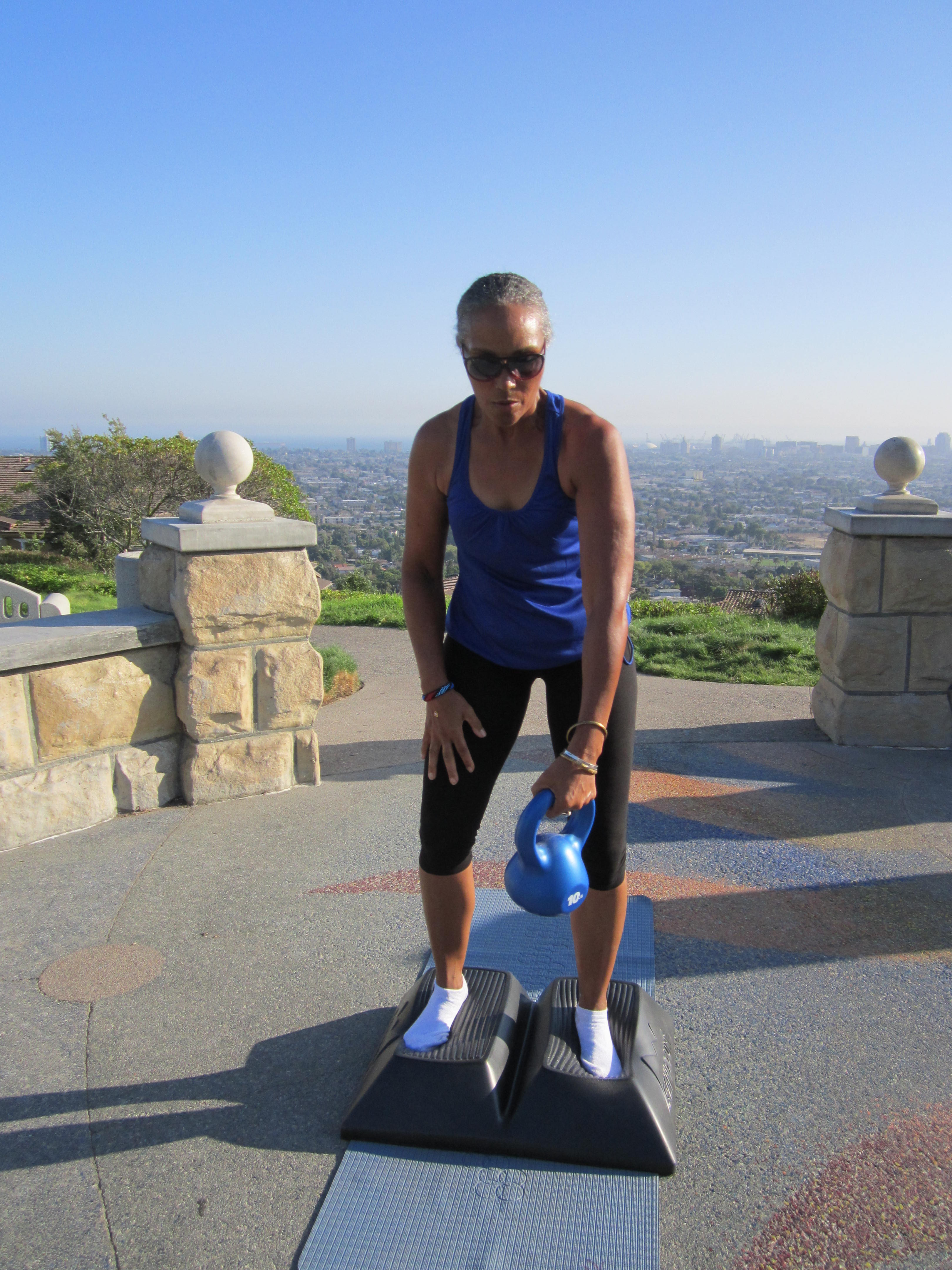
Kettlebell workout on Original SANDDUNE
Celebrate 4th of July with Appreciation
Independence Day is a day to reflect and show appreciation for Liberties we have accessible to us, collectively and individually in America.
This is the Land of Opportunity even in hard times.

Have a Safe and Sane Holiday from the Original SANDDUNE™!
Sharing a post from Houston Methodist

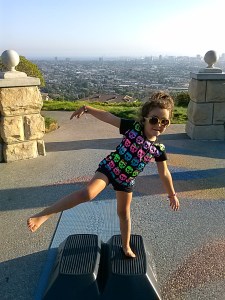
Dancing on the SAND
Robert Contreras of Inspire Dance Company of Las Vegas and his dancers show their moves on Original SANDDUNE. Solid building tool for dancers from youth to adult. Challenges and strengthens!
The Brain’s job and Neuroplasticity
The brain’s job is to learn and when occupied in an inner awareness or mindful undertaking, like meditation, its capacities grow because you need to pay attention/focus for the brain to learn the activity.
- In yoga, for example, when you first begin, one must move slowly and mindfully to understand what is happening when learning a new motor skill.
- The focus on and practice of these new activities causes the brain to adapt, and to create new motor and sensory-motor maps for the task at hand.
- This is known as “neuroplasticity.”

Science has shown that this phenomenon of the brain called “neuroplasticity,” enables it to create its own re-organization and produce new neurons. Dr. Paul Bach-y-Rita, American neuroscientist and Moshe’ Feldenkrais, a Ukrainian born physicist/mechanical engineer, are responsible for coining the term and introducing this to the world of science.
The premise of the Original SANDDUNE™ addresses:
- neuromuscular disorders
- performance acceleration
- weight control
- balance issues
In the realm of sports, it has been used by dancers, professional, amateur, and “school based” teams, and medically by physical/occupational therapists for injury and post surgery rehabilitation.
How does the SANDDUNE help with balance and strength?
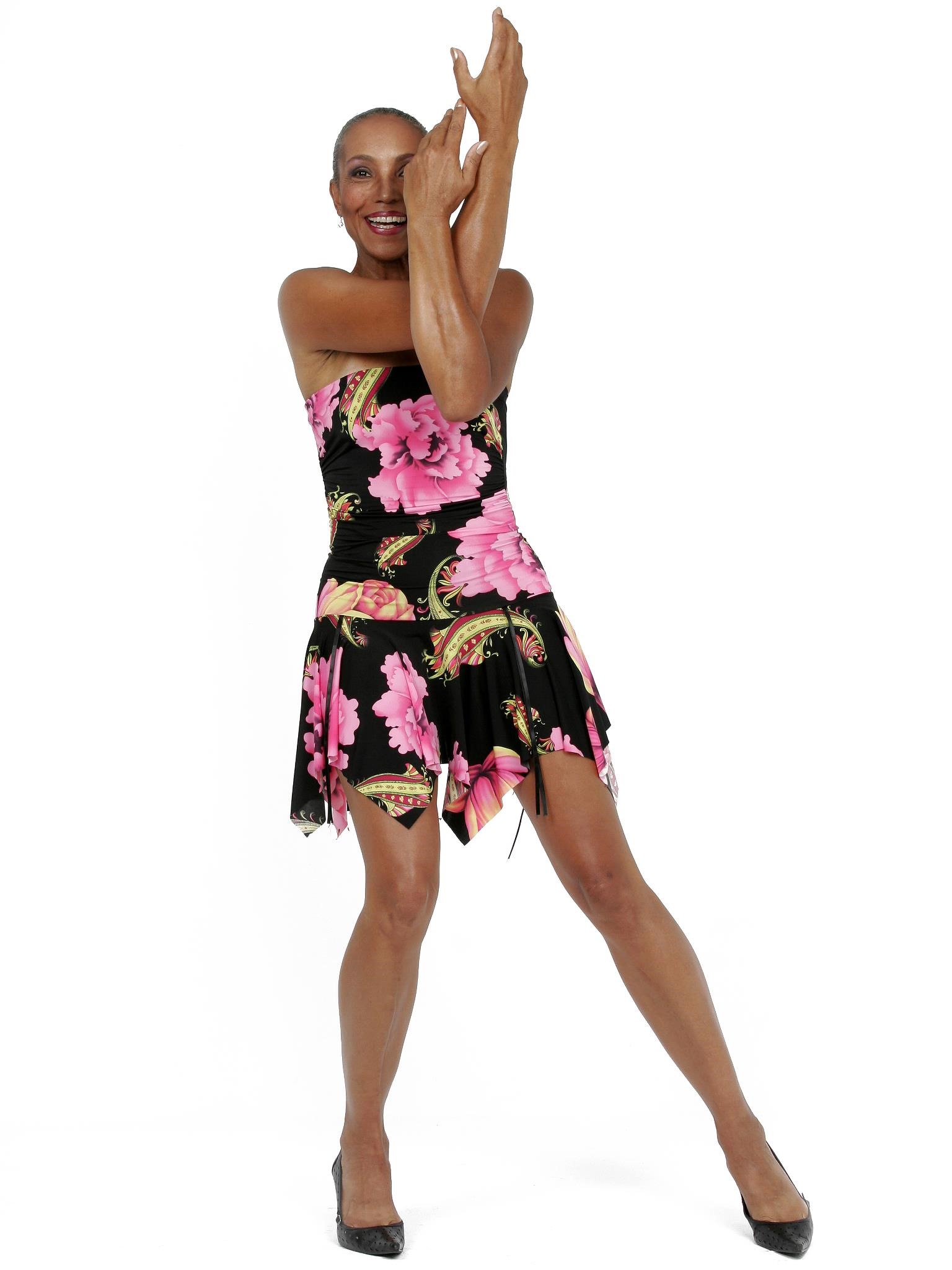
Eagle’s Lost Focal Point!
The Original SANDDUNE™ simulates walking in loose sand at the beach. It challenges your body to find its center of gravity. The natural phenomenon of neuropaths being re-activated after lack of activity caused by injury, illness or sedentary lifestyle, causes your muscles to react to signals from your brain, which begins a process of strengthening those muscles which are necessary to restore and maintain good balance.
For example, people with strong balance can try this Spine Stretch exercise described below on the SANDDUNE to really build and challenge their balance. From there progress to positions like the Eagle pose in Yoga. Make sure you have someone present with you to spot if this is new for you. If not, have a barre or something sturdy and stable to assist you should you loose your balance – wall or sturdy chair for example. Make sure there are no sharp object around you.
- Center yourself on the SANDDUNE with a small ball if you like, weighted or not, in your hands, with arms bent so that the ball is at your neck just below your chin.
- Stand straight, tailbone tucked with bellybutton pulled back toward your spine so your core is engaged and active. Remember as you increase your flexibility you are increasing your core strength on this apparatus.
- Before you begin your roll down, pick a focal point on the floor to maintain your balance once your eyes meet the floor.
- Now, imagine peeling an orange, trying to keep the peel in one piece as you prepare to begin a roll down (similar to what is done when doing a spinal stretch forward on the floor). If you are not an orange lover, then think Slinky toy and their fluid motion.
- Tuck your chin close to your chest resting it on top of the ball in your hands as you begin to slowly drop your head onto the ball in your hands and start to descend into your stretch. SLOWLY is the key word here. Your eyes focal point should follow the movement of your head. Draw an arc with your eyes or close your eyes and watch your body’s movement in a mindful visual manner.
- As you roll down, your head, hands and the ball will come into line with your waist. This is when you begin to uncurl your arms, keeping them close to your body and drop the ball slowly as you stretch the ball toward your feet. As Martha Graham, the great American Dancer said, “When you extend your arm, it doesn’t stop at the end of your fingers.”
- When you reach your feet, mindfully relax for a count of what is comfortable for you if this is your first time so that you can understand your body’s adjustments to being on a moving surface. A count said out loud of 1001, 1002, 1003 is a great way to gauge what your body’s balance can handle. Another quote from Martha Graham put this into perspective. “First we have to believe, then we believe.” “The body never lies.”
- At the end of your count, roll back up to standing in the same slow, fluid manner that you descended to your feet.
- I like to do this 10 to 20 times unless I want a deep stretch and trying to tuck my fingers under the SANDDUNE™ to increase my stretch.

Eagle Focus Found on The SANDDUNE!
Your Internal GPS
Experiencing weight bearing activity on a compliant surface such as the Original SANDDUNE, engages use of proprioception otherwise known as your internal GPS. Exercise on this apparatus safely recruits muscle fiber without the traditional tearing that occurs on hard surfaces. This is why we suggest padding for at least 2 weeks to become acquainted with the Original SANDDUNE™’s unconventional surface.
Padding is simply walking but keeping your feet in constant contact with the surface. This is suggested for EVERYONE, including high-functioning athletic types. Resist the temptation to jog. Why? Because you are retraining every muscle and joint in your body including long and short muscles closest to the bone.
This is “mindful” centering of the somatosensory body (in this case determining the exact location of sensations on your body) – is a new way of educating and retraining the foundation of your physical body (neuropathways) using the SANDDUNE™.
Simply holding on to a bar and learning to stand on one leg with your other foot raised slightly above the pad after you have centered yourself or just standing and learning to create small dime size circles clock-wise and counter-clockwise under your foot, noticing how the sensation moves up your legs into the trunk and into the hip sockets, will help you begin to retrain your foundation.
Learning the subtleties of how the body aligns and connects through the resistance option of both uphill and downhill positions teaches postural integrity. The uphill slope is higher and simulates walking uphill. The downhill slope is lower and simulates walking downhill.
Beginning these exercises slowly and building speed and momentum may not feel like much to start, but the results will definitely make themselves known or felt in a relatively short time as the muscle activation becomes stronger and the movement easier.
Once you step off and resume walking on a normal surface, you will begin to notice subtle changes in your posture. This is your new way of educating and retraining the foundation of your core balance, strength, and coordination.
Peeling The Heel on the Original SANDDUNE™
“PEELING THE HEEL” ON THE ORIGINAL SANDDUNE™
As we age, our bodies change and we must learn ways to continue to function independently by learning how to work with change. This includes how to listen to the body, sense change and noting where you are in space. By preparing for change and understanding where the center of gravity is through balance and alignment training and by strengthening the body’s core, daily function becomes a much easier part of life. Being able to find and sense the feet/ankles without always looking down when they are in an unfamiliar surrounding will increase your ability to balance more readily.
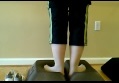
Learning to ground is sensing the entire foot working on the floor and being able to sense the body’s center. We call this mindfulness on the SANDDUNE. Learning to “Peel the Heel” is the ability to incorporate the whole foot in exercise thus strengthening it. One is able to learn to lift the knee and foot, higher, together facilitating easy of walking without stumbling or shuffling.
 Original SANDDUNE™