Home » Posts tagged 'SANDDUNE' (Page 3)
Tag Archives: SANDDUNE
Knee Pain Prevention
Martina Navratilova, AARP’s Fitness Ambassador, gives tips and suggestions about conditions and treatments for prevention of knee pain.
Scroll to the bottom of the page to follow her mini-workout to help you burn some calories, learn proper posture and work on your core.
Cardio Burst Workout
Cardio Work on the Original SANDDUNE™ for athlete or fitness buff.
To warm up – pad slowly for 1 minute. Do not get your heart rate up. When padding, your feet should barely come off of the pads.
- Run for 2 minutes as fast as you can.
- Pad slowly for 2 minutes
- Run for 30 seconds as hard as you can.
- Pad slowly for 2 minutes.
- Run for 30 seconds as hard as you can
- Finish with a 2 minute cool down.
- Step off the SANDDUNE and orient yourself on level ground. Walk around for a couple of minutes.
Do this workout 3 times a week. Within a two week period you should be able to realize a doubling of your cardiovascular capacity, and an increase in quad and core strength as well. This workout is equal to 3 hours of cardio work a week. Try this instead of your run, elliptical or stair stepper segment of your workout.
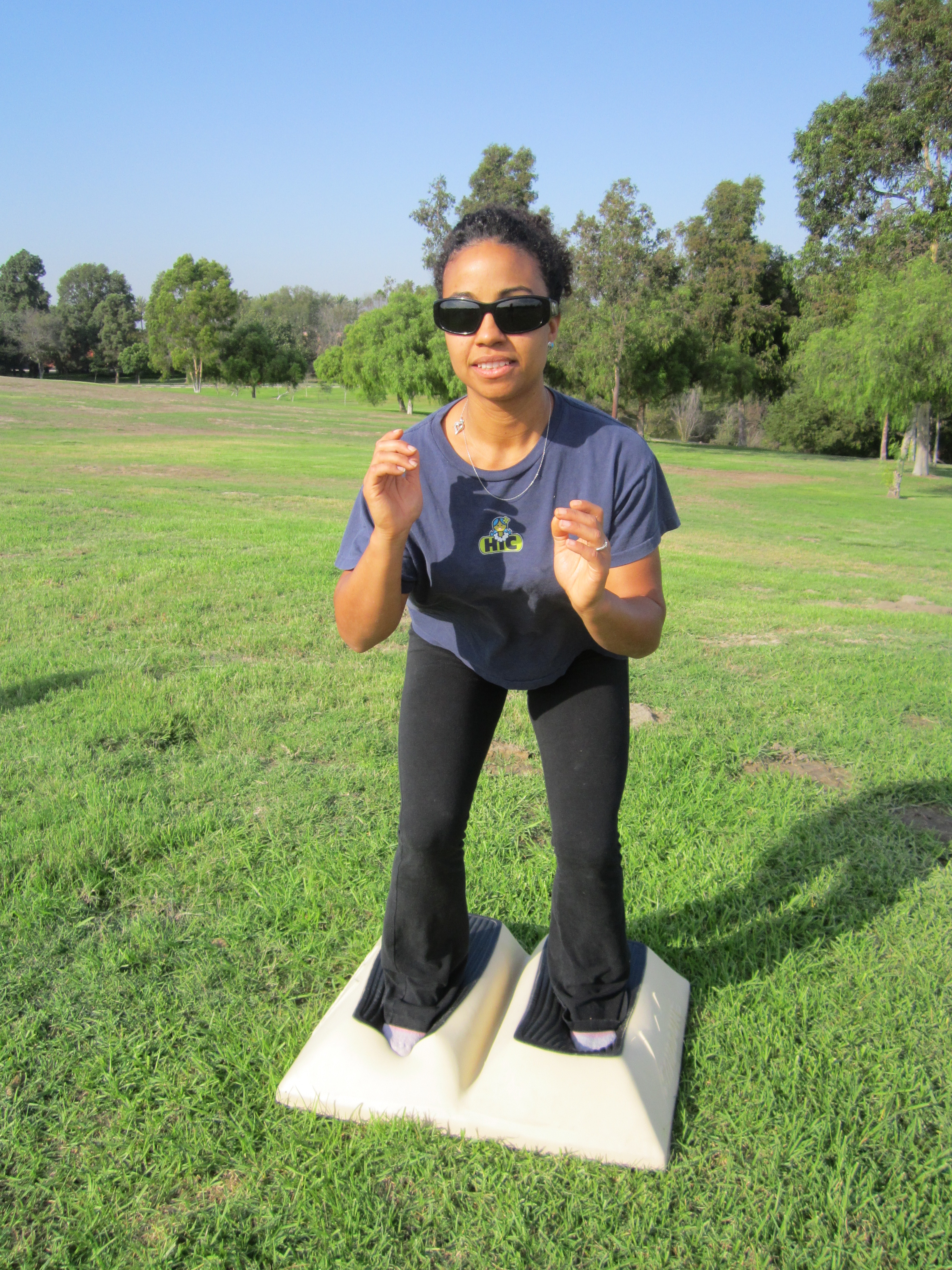
Squat Run position. Do not arch your back and only drop as low as is comfortable in the squat position.

Upright running position. Lift your knees as high as is comfortable.
Mindful Morning Start #5
Since you are on your knees from the cow/cat stretch, you can flow into light stretches for the chest, and shoulders. These will help increase your range of motion giving you more mobility and freedom of movement as your day begins. It creates a feeling of refreshment and invigoration.
 Sit back on your calves with your feet flat on the bed. Your hands are in the same position from the cow/cat stretch – under the shoulders. As you sit back on your calves without moving your hands, slowly and mindfully drop your head between your outstretched arms as though you are bowing or doing a courtesy. If you can rest your forehead on the bed, great. If not, remember that has your flexibility increases, your forehead will come closer to bed. Try this stretch twice, holding from 10 to 30 seconds. If you did yoga years ago, this is a variation of child’s pose. For those not yet ready to place their arms and hands in front of them to begin this stretch, bring your arms in next to your body and place your hands next to your feet in another variation of child’s pose. Gently tuck your head as close to your knees as your flexibility permits. Breathe deeply for 10 – 30 seconds, expanding your back muscles as you inhale. Do this twice. Relax between each stretch.
Now come back up to your knees and gently lower your body to the bed, stretching out to your full length. You are now going to stretch your abdominal muscles. Your knees should be slightly apart although some may choose a wider distance depending on flexibility. Bend your elbows bringing them close to your torso. Your hands should be parallel to your chin and nose with finger tips facing forward. As you begin to press your hands into the bed, slide your shoulder blades down your back and inhale. Do not over arch your back as your upper body comes off the bed. Allow your stomach muscles to remain hollow in this natural motion that occurs as you slowly and gently press your body upward. Do not arch your neck back, but keep it going forward in a straight line, as an extension of the spine being pulled by a string attached to wall. Release to the bed gently if you feel pinching or strain. Do this stretch twice, holding for 10 to 30 seconds. Relax between each stretch. These are gentle morning stretches!
US Veterans Discount
~ From Memorial Day, May 27, 2013 thru Independence Day, July 4th and ending on July 31, 2013 ~
Original SANDDUNE™ is offering
30% off the regular price of $279.00 to US Veterans.

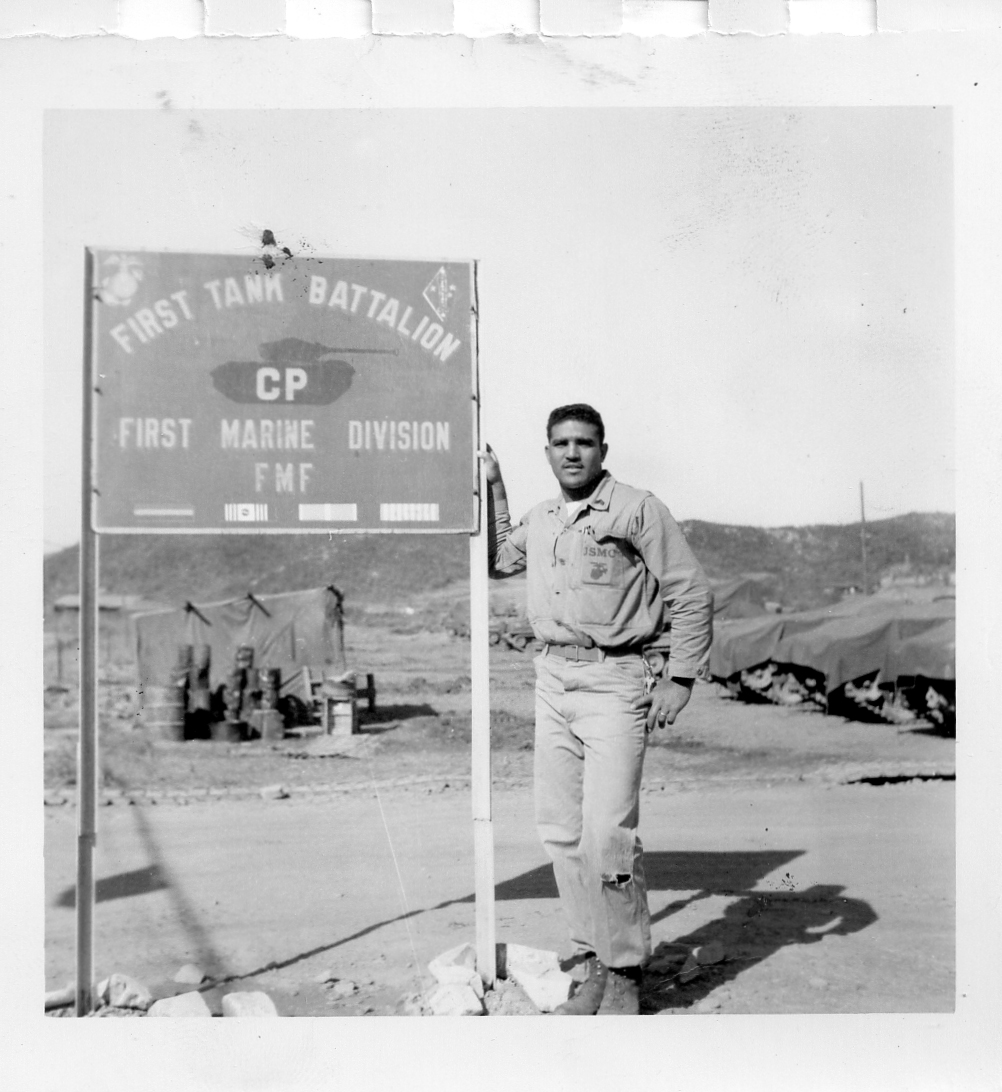
Navy Vet experience with Original SANDDUNE™
sam.gov Vendor



It Wakens Your Body!
This is an incredible apparatus. Andrea and I just purchased one, and we’re hooked. It strengthens your core, without any other gadgets. It starts with balance, then it teaches you about your body, by making your legs sing like they have been asleep. It wakens your body, and it is so simple, it seems like magic. Check out the site, you will thank me, honest. Kirk Wassell

Mindful Morning Start #4
Now that you have rocked, rolled and become still, it is now time to step up activating your body. Roll up to your hands and knees to begin a lower back stretch is in order. Make sure your fingers are facing forward and your toes/feet are flat on the bed or floor in the event the dog or cat or whomever, will not move over and give you your needed space! Hands should be under your shoulders or a couple of inches in front of the point on the shoulder and in line with your hips.
Begin with a flat back then drop your head downward, exhaling your breath, as you push the center of your back up opening the shoulder blades, widening your back and ending with the tucking of your tailbone. (cat stretch)
Now reverse the motion, inhaling your breath, as you begin to arch your back, press your tail bone upward and drop your belly.  Your head should be last to come up. As you return to the upper arch stretch of your back, make sure your head is last to drop into its position. Your head should always be the final body part to complete the stretching movement. You are creating a wave with your body, a fluid soothing motion to the spine. (cow stretch). If you are not used to this, begin with 5 stretches each and work up to as many as is comfortable for you. When you have finished your last stretch, become still with a flat back. Begin to feel your body awaken. Listen to your body.
Mindful Morning start #2
Now that you have finished your initial body rolling, gently draw your knees to your chest, holding them together or slightly apart, whichever is comfortable, as best you can. Hold for a count of 30. Now, gently rock back and forth on your back. Do not roll over to your side like you did in the first warm up exercise. This movement is done on a flat back. Do this 6-10 times, more if you like. In a second variation, hold your knees and mimic a walking motion while you are doing the gentle rock described above with your head slightly elevated or flat. Your knees can be slightly apart or wide as is comfortable for you. You’ll feel this massage in your upper and middle back as well as the lower back while warming up the hip flexors.
Start to Improve Lower Body Strength, Stability and Joint Mobility when you first rise
Start to Improve Lower Body Strength, Stability and Joint Mobility when you first rise, stand and walk in the morning. Think of how a cat or dog stretches when they get up. Learn to listen to your body and begin to recognize its changes. We are not taught to do this. Most of us just get up and hit the ground running without a thought of the body’s readiness to move or even the newness of the day. Try these suggestions to reconnect or begin to care for your body’s alignment starting with a morning regiment.
First begin with body rolling. It’s a soothing way to get the blood flowing as you roll from side to side with your arms and bent knees folding and unfolding as you roll back and forth. Begin lying on your right side in the fetal position. As you begin to roll on your back, let your left arm float open as it crosses your body and your back flattens on to the bed. Your left knee mirrors the movement of your arm as the hips. Complete the motion by bringing your right arm and leg over to meet their left side’s counterparts in the fetal position. Do this rolling back and forth 4-6 times.
When you finish rolling, gently draw your knees to your chest, either together or slightly apart, whatever is comfortable as best you can and hold for a count of 30. Then gently rock back and forth on back. Don’t roll over to your side like you in the first warm up. Do this 4-6 times.
Once your rocking is complete, become still and begin to visualize your head and neck in line with your spine, imagining someone is running a string from the center of your head to the tip of your tailbone as the spine aligns itself. Place your arms a few inches from your side with your palms down and legs straight, your feet and knees in line with your hips. Wiggle your body around a bit, settle in and relax for a minute or two in a brief mindful meditation.
Next, press the heel of one leg into the bed, keeping it straight. Feel your leg become tense and hold for 4 counts with the first press being light and subsequent presses done with quick release of the heel into the bed. Repeat this 4-6 times. Repeat with the other leg holding for a count of 4 and repeating this 4-6 times. As your body gets used to this, you might try increasing to 8-10 times…then 12-16 times. This increases circulation. Don’t push too hard in the beginning, as you may get a leg cramp! Once finished, prepare to stand.
As you come to your feet, remember to take your time and go slowly. Come to your feet (or sitting if you choose), begin to do foot circles by rolling the whole edge of your foot on the floor or the SANDDUNE™, to stretch and strengthen ankle flexion. Be sure your feet are in line with your hips as you stabilize yourself with a barre, chair, or sturdy counter. Be sure the knee of your standing leg is soft and your core is intact and active. Try this beginning with 5-10 circles clockwise and counter-clockwise with both feet working up to 15-20 circles. This movement will create an awareness of how the edge of the foot feels. This is something many people NEVER think about unless they are an athlete, especially a dancer, gymnast or athlete participating in any discipline involving continuous running, making rapid changes in many directions.
Now focus on your knees. I hear more people complain about their knees than their feet. When doing standing foot circles it is natural that knee circles follow. As you circle your foot, notice how the knee hinge is now drawing its own circle. This a natural integration of movement required for walking. Allow your foot to balance on the ball of the foot and concentrate on the circle you are now drawing with your knee. You can see the same movement with the knee if you are sitting, but not as pronounced. Watch it, become aware of the movement and how it feels. Repeating knee circles with the foot off the ground works the Psoas muscle in your back heightening your awareness of its connection with the hip joint socket. You can do this on the floor or the SANDDUNE™.
Because the feet and knees are now engaged, it is natural that the hips begin creating their own circles. Both standing/anchor leg and pushing leg are now engaged and the hip joints have begun to swivel, drawing their own circles. Hip swivels will create greater strength and mobility as the body naturally “oils the hip joints.” Go clockwise and counter-clockwise. This exercise can be done on the SANDDUNE™ as well with sturdy support or with a companion to spot you. Have one hand on your hip the other on bar or support. If your balance is good, hands on both hips. Start with 4-6 swivels in each direction working up to 12-16 times. If standing is not an option, do this on your knees and as strength and flexibility increase, you can work your way to standing.
Finally, keeping your standing/anchor leg’s knee soft, slightly bend your other knee and allow the ball of the foot to push into the ground as the heel remains raised, off the floor. This action lifts the “hip chamber” up and when you drop the hip back down it relaxes the muscles and joint. Do this 4-6 times on each leg working up to 8-10 times. The pushing action into the hip chamber strengthens the lower back muscles as well as the leg. Now you’re ready to get your day rolling and body is too.

I am physically active so why should I use the SANDDUNE™?
The Original SANDDUNE™ provides an additional platform for more effective warm-up and cool-down. Incorporate some of your stretches along with an easy jog to kick start the body’s engine. Try adding regular stationary exercises (ie…curls on the uphill slope) on the SANDDUNE™ for greater challenge because of the additional balance required. Golfers, who practice simulated strokes on the SANDDUNE™, report cutting strokes off their game because their bodies are more responsive. With consistent use, muscles are developed that you have been unaware of and were previously unengaged. This apparatus will help increase lean muscle mass. It is an easy workout perfect for a light day – add hand or ankle weights to increase the intensity of the workout if preferred.
For active people and athletes, cross training on the SANDDUNE™ translates into better coordination, more flexible joints/tendons, and responsive musculature. When beginning training or resuming working out after a self-imposed or injury-imposed layoff, the SANDDUNE™ helps reduces chances of injury and shortens recovery time as the sarcomeres (which are groups of muscle cells involved in the contraction and relaxations of muscles) are not so easily torn. It is the breakdown of the cells and muscle tissue that give us the inflammation and soreness we all love to hate. “No Pain, No Gain” as the old saying goes!
Muscles are usually stiff and sore a day or two after returning to activity because of damage to muscles fibers being stressed past their “normal or current” length from daily use. By the time you are into week #2 of becoming “Rocky”, additional sarcomeres have developed within the muscles, lending themselves to greater strength and protection of the muscles as they are being built up. Starting the workout regimen more prudently takes from the amount of “pain we gain” as we begin rolling toward fitness again. Remember that the SANDDUNE™ encourages proper use of the whole body in walking, running, golfing, dancing and sports.

Another option for exercise
Why are active people in their 50’s and 60’s needing knee and hip joint replacements? Could it have something to do with how we have exercised in the past and into the present?
When you think about it, we live in a very flat world. We walk on hard surfaces. Pavement, flooring, stairs, treadmills and even elliptical trainers do not require the foot to respond in the way that walking on the uneven ground or sand does. In fact all that hard pounding on pavement actually dulls our sensory systems. We have over 90 muscles in our pelvic area, legs and feet. Walking and running on hard, unforgiving surfaces cause the smaller, more sensitive muscles to guard against injury. They protect themselves by no longer participating when we walk. The result is that we use the same large muscles in our legs and buttocks in walking, running, biking and sports over and over. Eventually those overused muscles get stiff and sore, limiting movement in the joints. The result is that we are wearing out the joints of our legs early in our aging process. The SANDDUNE™ offers the option to “train” on a surface that is “easy” on the joints, muscles and tendons.
 Original SANDDUNE™