Home » Posts tagged 'stretches'
Tag Archives: stretches
How does the SANDDUNE help with balance and strength?
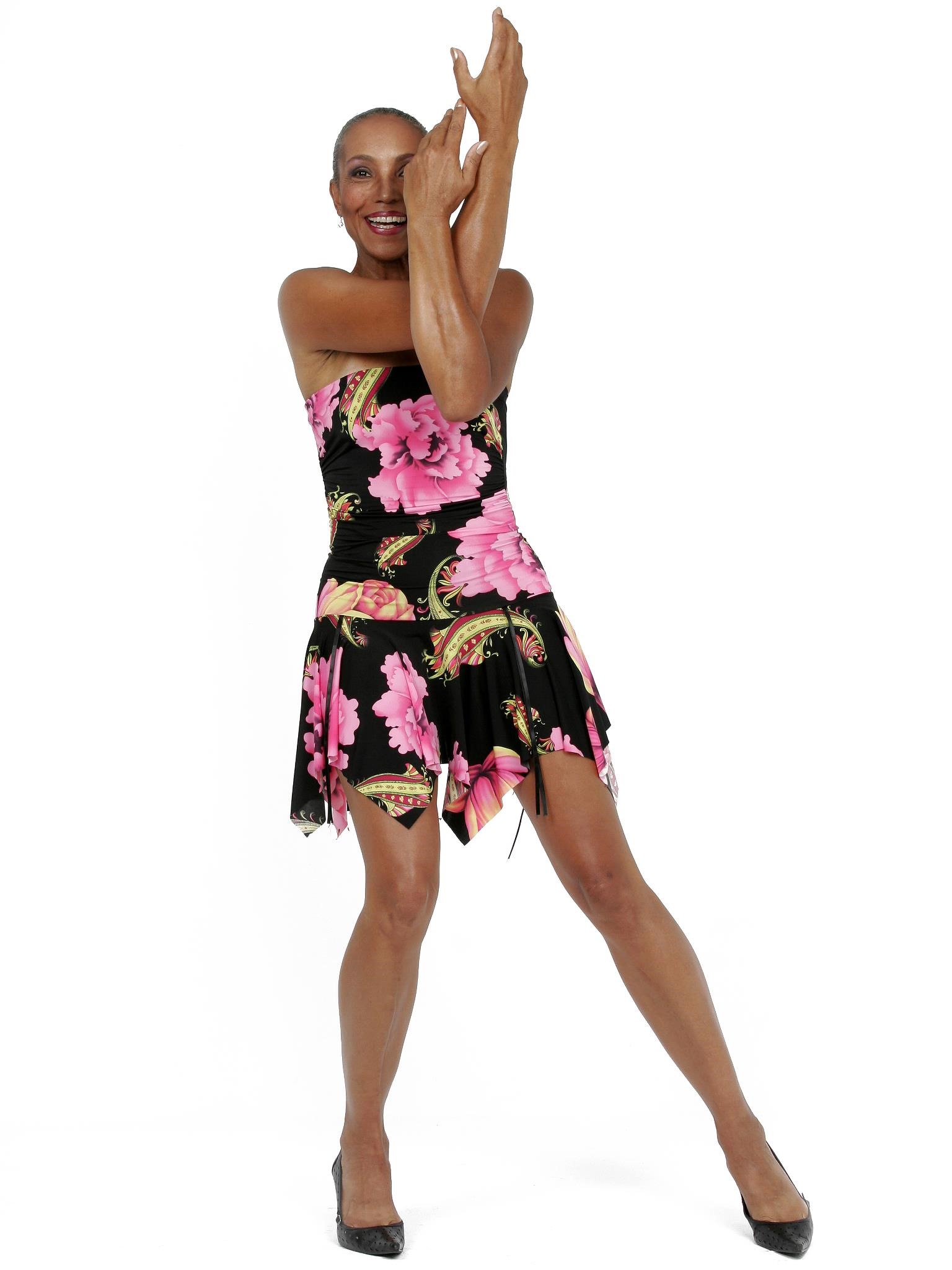
Eagle’s Lost Focal Point!
The Original SANDDUNE™ simulates walking in loose sand at the beach. It challenges your body to find its center of gravity. The natural phenomenon of neuropaths being re-activated after lack of activity caused by injury, illness or sedentary lifestyle, causes your muscles to react to signals from your brain, which begins a process of strengthening those muscles which are necessary to restore and maintain good balance.
For example, people with strong balance can try this Spine Stretch exercise described below on the SANDDUNE to really build and challenge their balance. From there progress to positions like the Eagle pose in Yoga. Make sure you have someone present with you to spot if this is new for you. If not, have a barre or something sturdy and stable to assist you should you loose your balance – wall or sturdy chair for example. Make sure there are no sharp object around you.
- Center yourself on the SANDDUNE with a small ball if you like, weighted or not, in your hands, with arms bent so that the ball is at your neck just below your chin.
- Stand straight, tailbone tucked with bellybutton pulled back toward your spine so your core is engaged and active. Remember as you increase your flexibility you are increasing your core strength on this apparatus.
- Before you begin your roll down, pick a focal point on the floor to maintain your balance once your eyes meet the floor.
- Now, imagine peeling an orange, trying to keep the peel in one piece as you prepare to begin a roll down (similar to what is done when doing a spinal stretch forward on the floor). If you are not an orange lover, then think Slinky toy and their fluid motion.
- Tuck your chin close to your chest resting it on top of the ball in your hands as you begin to slowly drop your head onto the ball in your hands and start to descend into your stretch. SLOWLY is the key word here. Your eyes focal point should follow the movement of your head. Draw an arc with your eyes or close your eyes and watch your body’s movement in a mindful visual manner.
- As you roll down, your head, hands and the ball will come into line with your waist. This is when you begin to uncurl your arms, keeping them close to your body and drop the ball slowly as you stretch the ball toward your feet. As Martha Graham, the great American Dancer said, “When you extend your arm, it doesn’t stop at the end of your fingers.”
- When you reach your feet, mindfully relax for a count of what is comfortable for you if this is your first time so that you can understand your body’s adjustments to being on a moving surface. A count said out loud of 1001, 1002, 1003 is a great way to gauge what your body’s balance can handle. Another quote from Martha Graham put this into perspective. “First we have to believe, then we believe.” “The body never lies.”
- At the end of your count, roll back up to standing in the same slow, fluid manner that you descended to your feet.
- I like to do this 10 to 20 times unless I want a deep stretch and trying to tuck my fingers under the SANDDUNE™ to increase my stretch.

Eagle Focus Found on The SANDDUNE!
How does the SANDDUNE help with balance and strength?
Eagle’s Lost Focal Point!
The SANDDUNE™ simulates walking in loose sand at the beach. It challenges your body to find its center of gravity. The natural phenomenon of neuropaths being re-activated after lack of activity caused by injury, illness or sedentary lifestyle, causes your muscles to react to signals from your brain, which begins a process of strengthening those muscles which are necessary to restore and maintain good balance.
For example, people with strong balance can try this Spine Stretch exercise described below on the SANDDUNE to really build and challenge their balance. From there progress to positions like the Eagle pose in Yoga. Make sure you have someone present with you to spot if this is new for you. If not, have a barre or something sturdy and stable to assist you should you loose your balance – wall or sturdy chair for example. Make sure there are no sharp object around you.
- Center yourself on the SANDDUNE with a small ball if you like, weighted or not, in your hands, with arms bent so that the ball is at your neck just below your chin.
- Stand straight, tailbone tucked with bellybutton pulled back toward your spine so your core is engaged and active. Remember as you increase your flexibility you are increasing your core strength on this apparatus.
- Before you begin your roll down, pick a focal point on the floor to maintain your balance once your eyes meet the floor.
- Now, imagine peeling an orange, trying to keep the peel in one piece as you prepare to begin a roll down similar to what is done when doing a seated spine stretch. If you are not an orange lover, then think Slinky toy and their fluid motion.
- Tuck your chin close to your chest resting it on top of the ball in your hands as you begin to slowly drop your head onto the ball in your hands and start to descend into your stretch. SLOWLY is the key word here. Your eyes focal point should follow the movement of your head.
- As you roll down, your head, hands and the ball will come into line with your waist. This is when you begin to uncurl your arms, keeping them close to your body and drop the ball slowly as you stretch the ball toward your feet. As Martha Graham, the great American Dancer said, “When you extend your arm, it doesn’t stop at the end of your fingers.”
- When you reach your feet, mindfully relax for a count of what is comfortable for you if this is your first time so that you can understand your body’s adjustments to being on a moving surface. A count said out loud of 1001, 1002, 1003 is a great way to gauge what your body’s balance can handle. Another quote from Martha Graham put this into perspective. “First we have to believe, then we believe.” “The body never lies.”
- At the end of your count, roll back up to standing in the same slow, fluid manner that you descended to your feet.
- I like to do this 10 to 20 times unless I want a deep stretch and am trying to tuck my fingers under the SANDDUNE to increase stretch.
Eagle Focus Found on The SANDDUNE!
Making Rehabilitation exercise made acceptable
When recuperating from knee/hip surgery or injury, the biggest obstacle that many patients face is keeping with the program! Many patients do not like the pain of beginning physical therapy after this type of surgery because of the pain experienced when walking on hard surfaces. Appointments are skipped to avoid the pain. I have seen family and friends do just this. They may say to their physical therapists “I am doing great, doing my exercises everyday” and then not follow through with their recommended regimen at home because, again, it is painful and there is no incentive. This is one case where no pain, no gain it not mantra of choice.
The patient goes to the office for their visit and the physical therapist notes that their progress is not correlating with the amount of time reported for following prescribed exercises for “home” work. Therefore this renders the physical therapy sessions ineffective for the patient. 
Your center becomes the foundation of building coordination and strength. The SANDDUNE™ helps restore the stability, mobility, and flexibility to the muscles recovering and rebuilding after an injury or a replacement of the knee or hip. When on the exercising on the SANDDUNE™ you are not centered on your physical challenge.
Providing a challenging yet comfortable apparatus to rehabilitate with is a key factor in the motivation to keep appointments and do the prescribed therapeutic exercises. The Original SANDDUNE™ gently forces you to focus and become more mindful of your body’s movement while finding and maintaining your balance on the apparatus.
Mindful Morning Start #5
Since you are on your knees from the cow/cat stretch, you can flow into light stretches for the chest, and shoulders. These will help increase your range of motion giving you more mobility and freedom of movement as your day begins. It creates a feeling of refreshment and invigoration.
 Sit back on your calves with your feet flat on the bed. Your hands are in the same position from the cow/cat stretch – under the shoulders. As you sit back on your calves without moving your hands, slowly and mindfully drop your head between your outstretched arms as though you are bowing or doing a courtesy. If you can rest your forehead on the bed, great. If not, remember that has your flexibility increases, your forehead will come closer to bed. Try this stretch twice, holding from 10 to 30 seconds. If you did yoga years ago, this is a variation of child’s pose. For those not yet ready to place their arms and hands in front of them to begin this stretch, bring your arms in next to your body and place your hands next to your feet in another variation of child’s pose. Gently tuck your head as close to your knees as your flexibility permits. Breathe deeply for 10 – 30 seconds, expanding your back muscles as you inhale. Do this twice. Relax between each stretch.
Now come back up to your knees and gently lower your body to the bed, stretching out to your full length. You are now going to stretch your abdominal muscles. Your knees should be slightly apart although some may choose a wider distance depending on flexibility. Bend your elbows bringing them close to your torso. Your hands should be parallel to your chin and nose with finger tips facing forward. As you begin to press your hands into the bed, slide your shoulder blades down your back and inhale. Do not over arch your back as your upper body comes off the bed. Allow your stomach muscles to remain hollow in this natural motion that occurs as you slowly and gently press your body upward. Do not arch your neck back, but keep it going forward in a straight line, as an extension of the spine being pulled by a string attached to wall. Release to the bed gently if you feel pinching or strain. Do this stretch twice, holding for 10 to 30 seconds. Relax between each stretch. These are gentle morning stretches!
Mindful Morning start #2
Now that you have finished your initial body rolling, gently draw your knees to your chest, holding them together or slightly apart, whichever is comfortable, as best you can. Hold for a count of 30. Now, gently rock back and forth on your back. Do not roll over to your side like you did in the first warm up exercise. This movement is done on a flat back. Do this 6-10 times, more if you like. In a second variation, hold your knees and mimic a walking motion while you are doing the gentle rock described above with your head slightly elevated or flat. Your knees can be slightly apart or wide as is comfortable for you. You’ll feel this massage in your upper and middle back as well as the lower back while warming up the hip flexors.

I am physically active so why should I use the SANDDUNE™?
The Original SANDDUNE™ provides an additional platform for more effective warm-up and cool-down. Incorporate some of your stretches along with an easy jog to kick start the body’s engine. Try adding regular stationary exercises (ie…curls on the uphill slope) on the SANDDUNE™ for greater challenge because of the additional balance required. Golfers, who practice simulated strokes on the SANDDUNE™, report cutting strokes off their game because their bodies are more responsive. With consistent use, muscles are developed that you have been unaware of and were previously unengaged. This apparatus will help increase lean muscle mass. It is an easy workout perfect for a light day – add hand or ankle weights to increase the intensity of the workout if preferred.
For active people and athletes, cross training on the SANDDUNE™ translates into better coordination, more flexible joints/tendons, and responsive musculature. When beginning training or resuming working out after a self-imposed or injury-imposed layoff, the SANDDUNE™ helps reduces chances of injury and shortens recovery time as the sarcomeres (which are groups of muscle cells involved in the contraction and relaxations of muscles) are not so easily torn. It is the breakdown of the cells and muscle tissue that give us the inflammation and soreness we all love to hate. “No Pain, No Gain” as the old saying goes!
Muscles are usually stiff and sore a day or two after returning to activity because of damage to muscles fibers being stressed past their “normal or current” length from daily use. By the time you are into week #2 of becoming “Rocky”, additional sarcomeres have developed within the muscles, lending themselves to greater strength and protection of the muscles as they are being built up. Starting the workout regimen more prudently takes from the amount of “pain we gain” as we begin rolling toward fitness again. Remember that the SANDDUNE™ encourages proper use of the whole body in walking, running, golfing, dancing and sports.
 Original SANDDUNE™