Home » Posts tagged 'yoga'
Tag Archives: yoga
Sharing Harvard Health Twitter
 Harvard Health
 People who practice #mind-body medicine used fewer health care services, says new study http://hvrd.me/TvkPQ
“Just like fluorinating your water or vaccinating yourself, these are ways of keeping you healthy with, from a public health perspective, minimal investment,” Dr. Stahl says. “My own opinion is that we should probably be teaching those skills in grade school.”
Dancing on the SAND
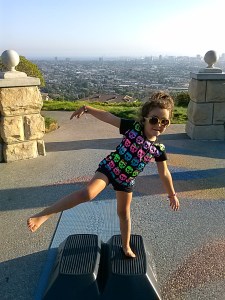
Robert Contreras of Inspire Dance Company of Las Vegas and his dancers show their moves on Original SANDDUNE. Solid building tool for dancers from youth to adult. Challenges and strengthens!
HAPPY NEW YEAR!
AS THE NEW YEAR DAWNS
THE ORIGINAL SANDDUNE™ WISHES YOU A
BALANCED, HAPPY, HEALTHY & PROSPEROUS
NEW YEAR IN 2014!

COG – Center of Gravity

When you begin to learn about the Center of Gravity or COG whether you are standing or sitting, you will learn how many small movements contribute to your COG and how they awaken the spine and your feet as the foundations for your COG.
You learn:
- how to sit properly on your sit bones vs. slouching and how this affects your posture both sitting and standing. If you slouch when you sit, you will most likely slouch when you stand. This
 means learning to keep the belly button pulled in, shoulders square, a long spine and open chest (no slouched shoulders or shuffling when walking).
 - the importance of eye and head movement to sound balance. Most people do not “think” about how eye and head movement affect the body’s everyday functioning. This is especially critical as we age.
- the relevance of sensing your ankle, arch, heel pad, the ball of your foot, and be able to differentiate and move the five toes, which many people never think of doing.

Because the feet are the Foundation for the COG, weight shifting – both standing and dynamic (walking, running, cross training, etc), and learning to work your  heels and toes together are paramount to healthy gait and balance. This applies whether one is aging, recovering from an injury/surgery or extended time off of the feet due to illness.
Understanding this leads to the comprehension of how these individual systems tie into “proprioception” or knowing where your body is in space. The sensors engaged by this proprioception are in each joint, the bottoms  of the footpads, the visual and vestibular (inner ear) system as well as touch. For example, proprioception not only helps with daily direction-finding, but also is essential to becoming a beautifully expressive dancer or gymnast, successful professional golfer, or runner.
Together these sensors help to provide information about the environment that we see daily and that the muscles are engaging in judging the height of  a step, the distance to the rail or ball, the depth of the curb, or the placement of the foot as a turn or a yoga stance is executed.
Learning to stretch and strengthen these muscles, their respective systems and their correlating movements on the non-compliant surface of an Original SANDDUNE™ makes it easier to do on solid ground. Why is it easier? You are not trying to balance your body on the ground as you do on the mirror resisting exercise produced by the Original SANDDUNE™. Referenced from Miriam Tate’s findings and class development.

Mindful Morning Start #5
Since you are on your knees from the cow/cat stretch, you can flow into light stretches for the chest, and shoulders. These will help increase your range of motion giving you more mobility and freedom of movement as your day begins. It creates a feeling of refreshment and invigoration.
 Sit back on your calves with your feet flat on the bed. Your hands are in the same position from the cow/cat stretch – under the shoulders. As you sit back on your calves without moving your hands, slowly and mindfully drop your head between your outstretched arms as though you are bowing or doing a courtesy. If you can rest your forehead on the bed, great. If not, remember that has your flexibility increases, your forehead will come closer to bed. Try this stretch twice, holding from 10 to 30 seconds. If you did yoga years ago, this is a variation of child’s pose. For those not yet ready to place their arms and hands in front of them to begin this stretch, bring your arms in next to your body and place your hands next to your feet in another variation of child’s pose. Gently tuck your head as close to your knees as your flexibility permits. Breathe deeply for 10 – 30 seconds, expanding your back muscles as you inhale. Do this twice. Relax between each stretch.
Now come back up to your knees and gently lower your body to the bed, stretching out to your full length. You are now going to stretch your abdominal muscles. Your knees should be slightly apart although some may choose a wider distance depending on flexibility. Bend your elbows bringing them close to your torso. Your hands should be parallel to your chin and nose with finger tips facing forward. As you begin to press your hands into the bed, slide your shoulder blades down your back and inhale. Do not over arch your back as your upper body comes off the bed. Allow your stomach muscles to remain hollow in this natural motion that occurs as you slowly and gently press your body upward. Do not arch your neck back, but keep it going forward in a straight line, as an extension of the spine being pulled by a string attached to wall. Release to the bed gently if you feel pinching or strain. Do this stretch twice, holding for 10 to 30 seconds. Relax between each stretch. These are gentle morning stretches!
 Original SANDDUNE™